
For the past four years, my team and I have been working with collaborators on a range of projects that have aimed to understand household antibiotic use practices in different contexts in Malawi. I am delighted to say that we have a new publication that focuses specifically on antibiotic use and small-scale intensive farming in Malawi.
Antibiotics and meat production
Since the 1960s, routine use of antibiotics in meat production has reduced the cost of food and enabled radical gains in both yield and profit. Yet, the regular dosing of food animals with sub-therapeutic doses of antibiotics to promote growth and prevent disease has been identified as a potential driver of antimicrobial resistance in both humans and animals. There are significant knowledge gaps around antibiotic use practices, particularly in sub-Saharan Africa.
Our paper A Qualitative Study of Antibiotic Use Practices in Intensive Small-Scale Farming in Urban and Peri-Urban Blantyre, Malawi: Implications for Antimicrobial Resistance was published in Frontiers in Veterinary Science, on the 24th May 2022 attempts to address this gap. The fieldwork was conducted by my team at the Malawi-Liverpool-Wellcome Trust as part of the DRUM study funded through the Liverpool School of Tropical Medicine. John Mankhomwa is the first author of the paper. We used a qualitative research methodology (participant observation, medicine use survey and interviews) to provide an in-depth understanding of antibiotic use practices in households in urban and peri-urban Blantyre. We provide information on the types of antibiotics used, how they are used and why we see this pattern.
Small-scale intensive farming
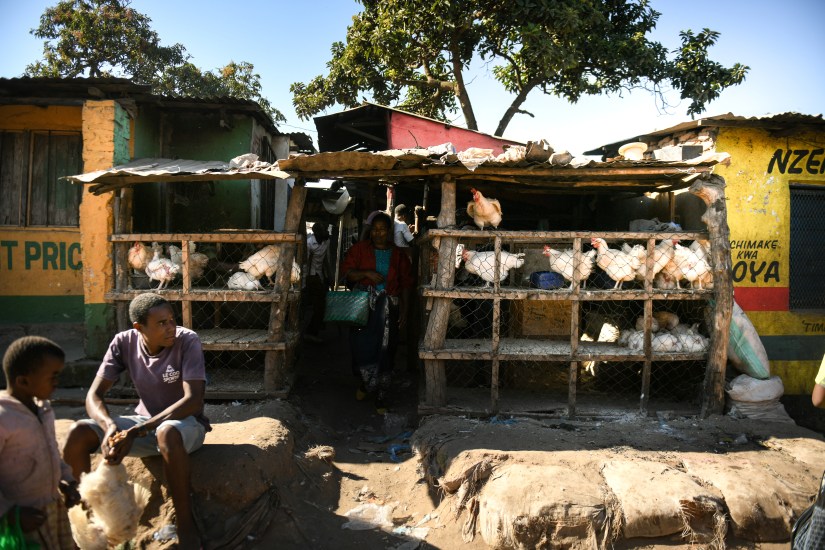
Chickens were most frequently farmed animals by scale-scale intensive farmers. To raise the birds quickly and ensure they remained healthy, farmers relied heavily on antibiotics. There were also times when farmers unknowingly gave antibiotics to their birds through feed and vitamin mixes. The dependence on antibiotics by these farmers was shaped by intersecting factors including livelihood precarity, unequal market conditions, timeliness, and affordability of access to veterinary advice and services. All animal antibiotics used were manufactured internationally and imported. The political economy and governance of medicines underpinned these immediate drivers.
Implications of our work
Our findings speak to the need for a holistic approach to interventions to optimise the use of antibiotics in food animals in Malawi. Interventions to reduce dependence on antibiotics are required. These should include efforts to improve farmers’ timely access to affordable veterinary services and provide more information about appropriate antibiotic use including withdrawal periods and feed supplementation. At the policy level efforts are also needed to strengthen regulation and the enforcement of legislation nationally and globally.


