Research Impact

Language matters in research impact

The language we use in research impact matters. It shapes how we understand the people and communities connected to research, whose knowledge and experiences we recognise, and how we approach engagement.

A commentary published in Cochrane Evidence Synthesis and Methods explores this through the widespread use of the term “stakeholder”. The authors consider the term’s colonial connotations and propose “interest-holders” as an alternative.

They define interest-holders as groups with legitimate interests in an issue because they are responsible for, or affected by, decisions that research evidence can inform.

I think this is a useful contribution to a much wider conversation about the language of research impact. There is still quite a lot of fuzziness around terminology. I mostly use “research users”, because it encourages researchers to think about who might actually use or benefit from their research. But that language has limitations too: people and communities can have a legitimate interest in research without necessarily being expected to “use” its findings.

That is where I can see real value in “interest-holders”. It gives us another way of thinking about the people who have an interest in, or may be affected by, research.

What does this mean for research impact practice?

Context matters. This is a useful prompt to think more carefully about the language we choose.

When planning impact and engagement, we might ask:

  • Who is affected by this research, as well as who might use it?
  • Does the language we are using accurately describe people’s relationship to the research?
  • Are there terms that could exclude, misrepresent or cause harm to the people we hope to engage?

Language is not separate from good engagement practice. Being willing to question familiar terminology, and find alternatives when it no longer serves us, is part of creating more thoughtful and inclusive approaches to research impact.

Read the commentary.

REF, Research Impact, Resource library

Does local impact mean less impact?

Does impact become more valuable when it extends across a larger geographical area?

In Local reach, global significance? The politics of scale and the competing imaginaries of the UK research impact agenda, Justyna Bandola-Gill explores the complicated relationship between reach, significance and geographical scale within the UK research impact agenda.

Drawing on qualitative research with academics, research managers and policymakers across two research-intensive universities, Bandola-Gill argues that institutional interpretations can create an informal hierarchy in which national and international impact are perceived as more prestigious than locally focused impact.

This is not what the formal REF guidance says. The REF 2021 guidance explicitly states that reach does not refer specifically to geographical scale. Impact within one UK region could be judged outstanding, while international reach does not necessarily make an impact outstanding.

The paper introduces the concept of “scalecraft” to describe how scale is constructed, negotiated and sometimes strategically reframed. Scale is therefore not simply an inherent characteristic of impact: it is also shaped by institutional cultures and assumptions about what valuable impact looks like.

What does this mean in practice?

For researchers and impact professionals, the paper offers a useful reminder not to use geographical scale as shorthand for the quality or value of impact.

When developing or assessing impact, we should consider:

  • Who has experienced change, and how significant was that change for them?
  • Does the scale of the impact make sense in relation to the research and its intended research users?
  • Are institutional expectations encouraging researchers to prioritise geographical breadth over depth, relevance or meaningful local relationships?

The paper is based on qualitative research across two sites, so it offers a conceptual lens rather than a comprehensive picture of practice across the sector. It would be valuable to explore how these ideas are reflected across the wider body of REF impact case studies.

The takeaway: local impact is not inherently less significant. What matters is the nature and extent of the change, who experiences it and the quality of the evidence – not whether it crosses a national border.

Professional Services, Research Communication

Using LinkedIn as a Research Professional: Reflections and Practical Tips

I recently delivered a session to the Research Professional Staff Network at my institution on how and why I use LinkedIn. So I wanted to share some of those reflections.

Firstly, I started engaging with LinkedIn after 15 years in research and international development, when I made the decision to change career. Moving out of an academic role and relocating from Malawi to Glasgow, I found it a really useful tool to get advice — from general career-change advice to seeing what people with PhDs in social research had gone on to do.

But once I found myself in a Research Professional role, I’ve found it great for building a network beyond my institution. One of the unexpected joys of moving into professional services has been the people. There is a huge amount of expertise and commitment in these roles. Yet, as Rachel Reeds highlights in her brilliant book Surviving and Thriving in Higher Education Professional Services, many of these roles are “invisible by design”.

That invisibility is often compounded by complex institutional hierarchies, where roles are frequently defined by what they are not — not academic — rather than recognised for what they are: highly skilled professional roles that underpin and enable the research ecosystem. For me, this is where LinkedIn is particularly useful, helping to make some of that otherwise invisible work more visible.

So, what tips would I give to research professionals who want to dip their toe into LinkedIn?

1. Start with contribution, not self-promotion
One of the common criticisms of LinkedIn is that it can feel overly self-promotional. I didn’t start out wanting to centre myself in that way. For me, it was about finding a way to contribute meaningfully. When I first moved into an impact role, I was reading academic and grey literature widely. I set myself the challenge of sharing what I was learning, with an audience in mind of academics and research professional staff interested in research impact. I felt much more comfortable approaching it as learning and contribution, rather than broadcasting. If you have a resource you love, or read something useful, why not consider sharing it? It doesn’t have to be a long post — you can embed the PDF and add a few reflections.

2. Share what you are already doing
You don’t need to create lots of new content. Some of the most useful posts I’ve seen come from people sharing insights from their everyday work. Running a workshop, supporting a funding call, helping with a collaboration? Research professional roles are so varied and often involve a huge amount of skilled guidance — I’ve found LinkedIn is a great way to surface that learning and contribution to the wider research ecosystem.

3. Engagement matters as much as posting
Commenting on others’ posts and joining discussions is just as important as writing your own content. I think it can often be a good place to start. If someone has taken the time to write a post, they are usually grateful that you’ve not only read it, but taken the time to comment. It boosts their reach (the algorithm rewards posts that get engagement), and it helps you get noticed. If there’s someone in your network you’d like to get to know better, commenting on their posts can help with that.

4. Some practical tips about increasing reach when you post

  • Avoid putting external links in your main post — unlike Twitter/X, the algorithm doesn’t reward this, so add them in the comments instead
  • Summarise early in the post what it’s about, and try to align it with the expertise you highlight on your profile
  • Engage before you post — I try to spend a bit of time commenting on others’ posts beforehand
  • Try to make posts useful and concise. You do have more space than on Twitter/X, but attention spans are short — I focus on what my audience might find useful and aim for practical, actionable tips
  • Use visuals where possible (slides, documents, images)
  • Add alt text to images and go easy on emojis — they can be frustrating for people using screen readers
  • Tag people and organisations thoughtfully — if they don’t engage, it can affect reach

But the algorithm is always shifting, and I am by no means an expert.

5. It’s a useful way to stay connected to what’s happening across higher education
More and more people and organisations in higher education are migrating to LinkedIn, particularly with the shift away from X. I’ve found it a really useful way to keep up to date with what’s happening — from funder priorities to sector debates. And, if we’re honest, things feel pretty uncertain in the sector at the moment, so having people with deep sector knowledge explain and interpret things has been incredibly useful.

6. Follow widely — beyond your immediate field
Some of the most valuable learning I’ve had hasn’t come directly from higher education. I follow people across different areas — leadership, hybrid working, motherhood and careers, organisational culture — and it has broadened how I think about my own work.

7. You never quite know what will resonate
Some of the posts I’ve spent the least time on have generated the most engagement. It’s not predictable, so it’s not worth overthinking. And when you first start posting, reach will likely be low — that’s completely normal.

8. Set your own boundaries
There is no single “right” way to use LinkedIn. You don’t need to share personal details, comment on everything, or spend large amounts of time on the platform. It’s entirely reasonable to use it in a way that feels manageable and aligned with your role. And ultimately, if the last few years of social media have taught me anything, it’s that you don’t own your content, and systemic changes can significantly impact what gets seen. Use your energy wisely — get outside, meet people in person.

Final reflection

For me, LinkedIn has become a space to stay up to date with sector developments and to connect with colleagues. But I also think it can play an important role in raising the profile of research professional work — helping to make visible roles that are often, by design, less seen.

If you’re thinking about starting to share more, I would say — start small, focus on what might be useful to others, and build from there. But if you have any tips, please do share. The real value for me has come from hearing how others use it.

Writing

The power of writing in company

Image created by generated by Stable Diffusion

To be a successful academic writer, maintaining focus is crucial. While this may seem like an obvious principle, it took me years to fully grasp its significance. This blog, the second in a series on strategies for academic writing, delves into the power of writing with others and how it can enhance productivity.

During the COVID-19 pandemic, I found myself trapped in a debilitating writer’s block. As a precariously employed academic, the inability to write was nothing short of disastrous. Papers and grant applications serve as the currency that secures the next academic contract, making the stakes even higher.

Like many people, my anxiety levels soared during this period. Endless worries consumed my mind. My children suffered from isolation and inadequate homeschooling, which fell on my unqualified shoulders. My family, residing thousands of miles away, became unreachable due to travel bans. The fragile state of the Malawian health system added to the weight on my shoulders. Insomnia became my constant companion, exacerbating the challenges I faced.

However, hitting rock bottom ultimately became a transformative moment in my journey. It was during one of those despairing nights, at 3 am, that I stumbled upon Rowena Murray’s Facebook group—a discovery that opened the doors to a world of structured writing retreats. Even amidst the pandemic, researchers ingeniously adapted Rowena’s renowned approach, originally designed for in-person events, and transformed it into virtual gatherings. Within this virtual space, I found solace in a community predominantly composed of women who, like me, struggled to balance their academic writing pursuits with their childcare responsibilities.

The approach itself was surprisingly simple yet remarkably effective. By joining the group, setting goals, eliminating distractions (such as phones, internet browsing, and email), and keeping the camera on to maintain accountability, I experienced a newfound focus solely on writing. Each session concluded with reflections on the progress made, with quantifiable measurements such as the number of words written or pages edited. Through this process, I gained fascinating insights into my own writing process:

  • I discovered how long it took me to write 100 words.
  • I recognized my tendency to get stuck on the first sentence.
  • I realized how little time I had previously dedicated to editing.
  • I learned that I was not alone in finding academic writing challenging.
  • I understood how sharing writing struggles with others could foster greater productivity.

Within this supportive space, women had the opportunity to share their writing struggles and celebrate their successes—a radical experience in its own right. It was here that I also met my incredible academic writing partner, Pip, with whom I continue to collaborate on a weekly basis. The impact of this approach is evident in my CV, boasting the publication of 10 academic papers.

If you find yourself grappling with a writing project, I encourage you to give this approach a try:

  • Consider asking a friend to become your writing partner.
  • Explore Rowena Murray’s Facebook group for a supportive community.
  • Experiment with Focusmate, a free platform that allows you to match with people working on tasks.

Although I have since transitioned away from full-time academia, the power of this approach remains ingrained within me. It has become an invaluable tool that I carry forward, empowering me in all areas of my life.

Writing

Finding focus in a distracting world

Image created by generated by Stable Diffusion

To be a successful academic writer, focus is crucial. While this may seem obvious, it took me years to fully grasp its significance. This blog is the first in a series discussing strategies for improving focus in academic writing. Here, I explore the impact of our physical environment on writing productivity and provide practical suggestions to try.

In recent years, UK universities have been engaged in building projects, revamping old structures, and constructing new ones. These buildings often showcase glass, metal, and extensive open-plan workspaces. Although open-plan offices are designed to promote collaboration and communication, mounting evidence suggests that they actually diminish productivity and morale across various industries.

As a dyslexic academic, an open-plan environment posed immense challenges for me. Sharing a space with others led to an abundance of distractions, exacerbating the difficulty of concentration. The noise from phone calls, meetings, and even simple breathing hindered my focus. After returning to work from my second maternity leave, I discovered that my desk in a small shared office had been reassigned.

I was relocated to an open-plan building adjacent to the kitchen. While the space was flooded with natural light, it had a severe impact on my academic writing productivity, which, in turn, affected my mental health. I attempted to drown out the sounds of the microwave and co-worker conversations with headphones, but nothing could mask the constant smells and foot traffic.

Having been diagnosed with dyslexia at the age of 7, I have always struggled with sitting and focusing. I mostly relied on my own coping mechanisms and remained silent about my difficulties. However, my experience in the open-plan office compelled me to request accommodation. Despite initial hesitation from my line manager, I persisted, and my request was eventually granted. Returning to an office with walls significantly improved both my writing productivity and mental well-being. I understand that not everyone can request an alternative desk, and advocating for such changes can be stressful. However, if you have a disability, it is worthwhile to raise the issue with HR or your line manager.

Creating a dedicated writing space that is comfortable and well-organised can greatly enhance focus and creativity. After years of trial and error, I discovered that I am most productive at 6 am, sitting at my desk at home with a cup of coffee, and I fiercely guard this time. But it took me years to uncover this routine.

If you are struggling with your writing, gaining a better understanding of what works for you can be tremendously helpful. The key to focused writing is shorter, concentrated writing periods rather than longer, more distracted ones. Set aside one hour to experiment, tracking your progress in each session. Take note of how the working environment makes you feel, and establish quantifiable goals such as the number of words written or pages edited.

Here are some strategies to consider:

  • Get out of the office: Find an alternative workspace, such as a university or public library, a café, or a meeting room—anywhere you can have control over your surroundings and minimise interruptions.
  • Utilise different spaces at home: If space permits, try sitting in different rooms at different times of the day. If you have a home desk, make it as inviting as possible. Keep your desk clear and use a monitor, keyboard, and mouse to ensure writing comfort. Consider setting an early alarm to get up and start your writing session at your desk.
  • In the office: If feasible, experiment with your working hours. Arrive early or stay later (while ensuring you take breaks and adjust accordingly—this doesn’t mean advocating for longer days) when foot traffic is lower. Try using noise-cancelling headphones and curate a playlist of familiar music that doesn’t distract you. While I’ve never enjoyed the sensation of wearing headphones, I can tolerate it for one hour. Remember to communicate to your co-workers that you are working on an important task and cannot be disturbed.

By implementing these strategies and creating a conducive physical environment, you can enhance your focus, productivity, and overall writing experience.

Writing

Can we ethically use #AI in #academicwriting?

Image generated by Stable Diffusion an AI text to image model

I’m teaching an academic writing course for the Malawi Liverpool Wellcome Programme. It is Week 11 of the 12-week course, and we focused on editing academic writing. During the session, we considered mistakes commonly made by junior academic writers and discussed strategies to improve the writing process.

One aspect of academic writing we spent time discussing was artificial intelligence tools (AI), and how academics can ethically engage with AI to help with the paper writing process.

ChatGPT is the latest in a series of artificial intelligence algorithms known as “large language models”. It has been trained on hundreds of millions of lines of text from the internet and uses this “training set” to generate text predictions in response to prompts or questions. Since the release of ChatGPT in November 2022, there has been intense debate in the academic community about the ethics of using large language models in scientific manuscripts. ChatGPT has been listed as an author on papers posted to pre-print servers such as medrXiv and has achieved infamy by being banned by some academic journals.

Using AI programmes such as ChatGPT to assist with writing raises important questions about academic integrity, and how authors maintain originality and authenticity in their writing.

During my teaching session, we discussed ways in which junior academic writers could ethically use AI programmes to support their paper writing. Some examples include:

Inspiration: Most academics find starting to write an academic paper challenging. Knowing that we must fill the blank page with thousands of carefully crafted words can feel daunting. This feeling can be particularly acute when it’s early in your career. Getting those first few sentences down can feel like climbing Mount Everest. Novice writers often spend disproportionate time crafting the perfect first sentence. ChatGPT can help solidify ideas by entering prompts and editing the generated texts. One way to start is by entering keywords, research objectives or hypotheses and asking ChatGPT to generate ideas for the introduction helping to overcome early stumbling blocks.

Organisation: Develop a scaffold outline for each section of your manuscript. Once you have begun to generate your ideas on the page, you can use ChatGPT to help organise and develop a structure for your manuscript. You can use a writing exercise such as freewriting (an approach developed by Peter Elbow to help academics generate text) and then build on this using prompts in ChatGPT to develop headings and sub-headings to help organise your ideas more coherently.

Editing: Some excellent editors offer a wide range of beneficial services… but usually at a cost (monetary for professional editors, or time for supervisors and colleagues). Novice writers often have their academic papers rejected early in submission because their work does not sufficiently follow academic writing principles. Using ChatGPT to help edit sentences, by feeding the programme text written by students, and prompting the programme to remove superfluous words and make sentences more concise. This could help speed up the editing process without asking the programme to generate sentences from scratch, which crosses an ethical line. Using ChatGPT will not replace an editor, but it can help authors, particularly those who use English as a second language – or have dyslexia – to edit their sentences quickly. Switching to an AI programme such as Paperpal that comprehensively checks manuscripts for language and technical and grammatical style before paper submission could help to diversify academic publishing by giving authors a better chance at success. To successfully write academic papers, you need to engage deeply with your subject matter, writing extensively in your field, to present empirical findings you need to have rigorously analysed your data and demonstrate you have done this. AI programmes will do none of this work. They have significant limitations in terms of accuracy, context, and bias, they may suggest inaccurate information. ChatGPT should not be used for referencing academic papers. Therefore, use AI software to help bring out the best in your academic writing, but it does not replace critical thinking, which still requires many work hours.

Writing

Dealing with emotions and reviewers’ comments

I once made the mistake of allowing my mother to read the revise and resubmit (RnR) for a journal article. Reading the reviewers’ judgements on my work left her furious. She wanted to write to them outlining why their critiques of my work were egregiously wrong. To be clear, my mum is not an academic, but just a ferociously protective mother.

Getting feedback from reviewers can trigger many emotions. The stakes can feel high, especially earlier in your career, when publications are so important for securing fellowships and jobs. As a dyslexic academic those emotions can often take me back to school when I frequently felt inadequate and frustrated when submitting work. Making time to respond to reviewers’ comments and reworking drafts can be daunting, especially if it has taken months and sometimes years to craft the first submission. Praise in academia is rare and enduring what can feel like constant negativity is challenging.

Here are some strategies I think are useful when managing emotional responses to reviewers’ comments:

  • If you have a negative reaction to an RnR, put it aside for 48 hours. During that time, resist the urge to look, but allow yourself to feel all your emotions. It is okay to take a moment to feel upset and disappointed, you have poured precious time and energy into crafting the draft.
  • Once you return to them, hopefully feeling calmer, try not to catastrophise and allow your inner critic to paralyse you. It is excellent news that you have received your comments. The journal editor has deemed it strong enough to be sent out for peer review and has secured reviewers who were willing to engage in your work, which is a great achievement; try to frame it positively in your mind.
  • Remember that acting as a reviewer is frequently unacknowledged labour and since the COVID-19 pandemic, fewer academics are making time to review. Another academic agreed to make time to engage with your work. At its best, the peer review process can strengthen your paper by helping you clarify your argument and the contribution your work is making; in the worst case scenario, at least someone has read your work!
  • Try to separate yourself from your work. As academics, our sense of self can be mistakenly caught up in our identity and sense of self. Try to remind yourself that the reviewer is not evaluating you as a person, just the words they see on the page.
  • Unfortunately, peer reviews are far from perfect, and reviewers can cross ethical lines and get things wrong. If you are concerned about a point, a reviewer has made you write privately to the editor handling the submission for clarification. I would not rush to do this, but instead, rebut it with evidence of why you feel the response has been misinterpreted. Be specific when making this case and clear in your reasoning, but try not to overwrite it. It is always a tricky balance between too much and too little detail but try to stick to the facts and move on.
  • When constructing the response letter, I always maintain politeness. I thank the reviewers at the start and try to maintain a positive tone, even in the face of the harshest comments. There is nothing to be gained by writing in an aggressive or passive-aggressive manner, it won’t help you reach the end of the process more quickly.

The reviewers’ comments that enraged my mother helped me substantially strengthen my paper’s argument, and it continues to be one of the papers I am most proud to have written. I will always be grateful to the reviewers for reading and engaging with my paper, despite the many hours it took me to respond.

Research

Quantifying antibiotic use in urban and peri-urban Malawi

Increases in drug-resistant infections have been blamed on “uncontrolled access” to antibiotics. But, what antibiotics do community members recognise and use in Malawi? In this pre-print, myself and researchers from the Malawi-Liverpool-Wellcome Research Programme, Liverpool School of Tropical Medicine and London School of Hygiene and Tropical Medicine, present findings from a cross-sectional survey on antibiotic use practices in Malawi.

In Malawi, there is no Chichewa word for an antibiotic as a group and this poses a significant challenge for asking survey questions, particularly when trying to measure the different types of antibiotics used. During our earlier ethnographic studies, we worked with partners to develop the drug-bag method. Sourcing as many antibiotics from formal and informal sources and placing the drugs in a pile allowed participants to identify which medicines they regularly used.

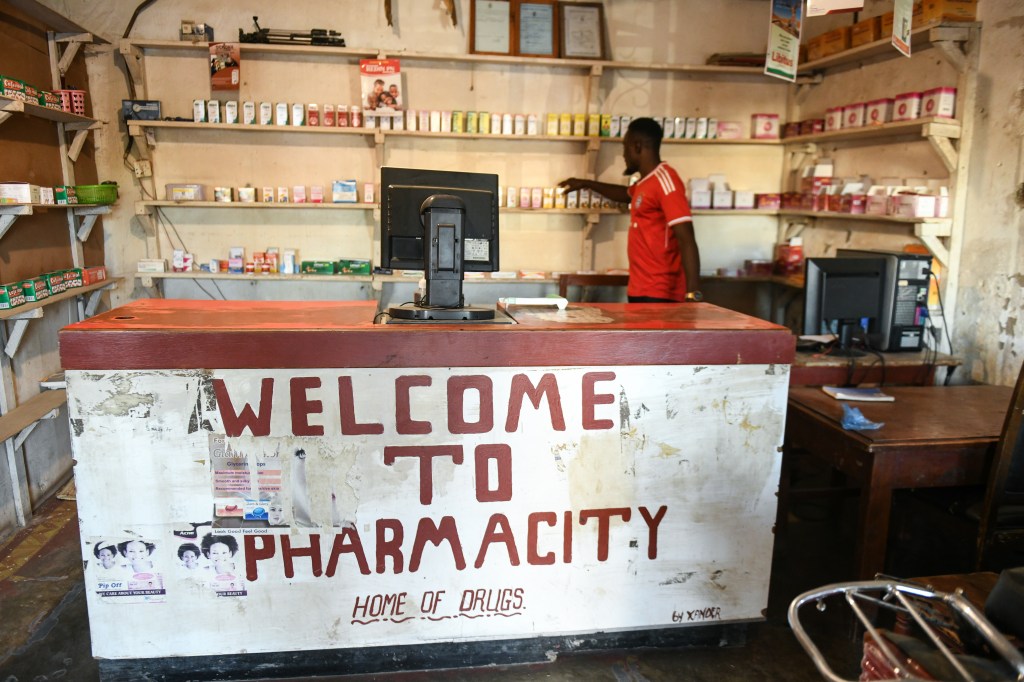
In this study, we used this method to ask about household use, including current and recent (the past 6 months). The number of antibiotics recognised was significantly lower among people with poorer formal healthcare access and amongst men, who are less likely to support healthcare-seeking for family members. Reported antibiotic use was mostly limited to a small number of antibiotics (amoxicillin, erythromycin and cotrimoxazole), with current antibiotic use reported by 67/1051 (6.4%) and recent use (last 6 months) by 440/1051 (41.9%). Our study seeks to the need for improved access to quality healthcare in urban and peri-urban African settings to promote appropriate antibiotic use and limit the development and spread of AMR

Ndirande, Malawi: Thoko Chikondi
Research

Antibiotic use practices in homes in rural Malawi

I have a new paper published in PLOS Global Public Health exploring antibiotic use in homes in Chikwawa Malawi. It was part of the FIEBRE study a multi-disciplinary study working in five countries in Africa and Asia exploring fever and antimicrobial use.

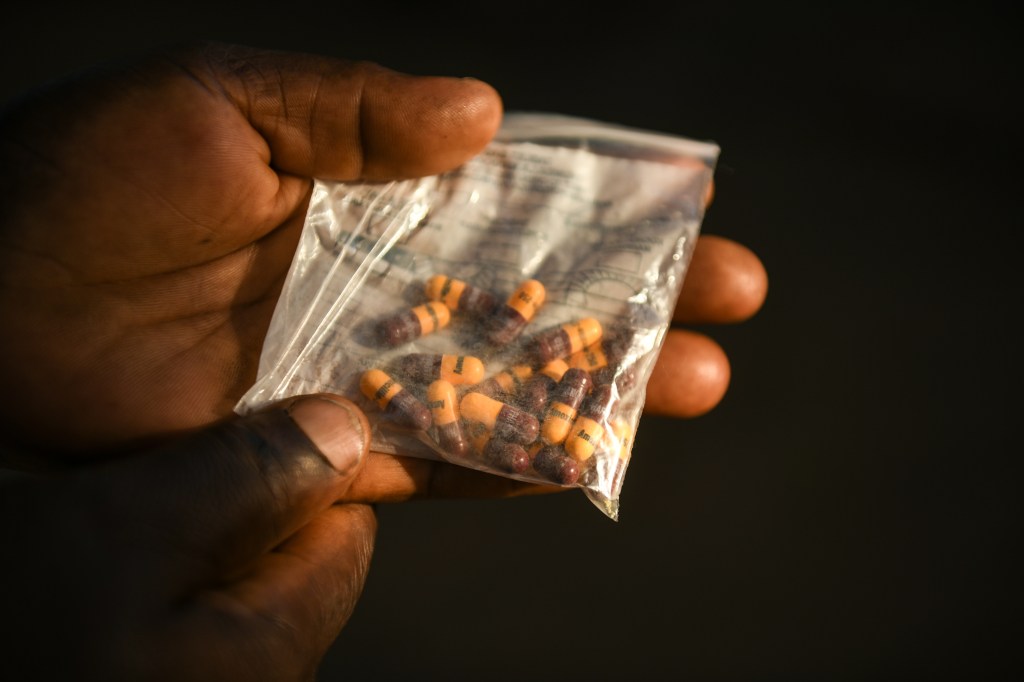
Photo credit: Thoko Chikondi

 Drug-resistant infections are increasing globally and urgent action is required to preserve current antibiotic classes. Antibiotic use in low-and-middle-income countries has gained international attention due in part to the number of medicines accessed informally. Public awareness campaigns have gained popularity, often conceptualising antimicrobial resistance as a problem of excess, precipitated by irrational behaviour. Insufficient attention has been paid to people’s experiences of accessing medicines in low-income contexts. Our ethnographic study was based in the Chikwawa District, Malawi, a place of extreme scarcity, and aimed to understand the care and medicine use practices of households dependent on subsistence farming. In Chikwawa, extreme weather events are becoming more frequent including excessive heat and catastrophic flooding. Creating significant damage to homes and crops. Making everyday life more precarious.

Key findings
We found the most frequently used antibiotics were cotrimoxazole and amoxicillin. Both antibiotics are on the access list according to the WHO AWaRe Classification, which means they should be easily accessible to patients when clinically needed. Participants spoke of the need to visit formal health systems for care and medicines. Recognizing to keep, share & buy medicines informally was not the “right thing” reflecting normative messages communicated by global health and development initiatives. Our ethnographic findings showed how incompatible these messages were for many residents and it was commonplace for residents to seek medicines informally. Often shaped by economic position of the household with free health care more costly than buying medicines. For women in particular helping neighbours through sharing drugs was an important part of broader social relations that included sharing and reciprocity.  In this context of scarcity, the notion that antibiotics could be taken as unthinkingly as sweets challenges the prevailing discourse that antibiotics overused everywhere.

Policy Implications
Our findings suggest in contexts of extreme scarcity policy actors need to be equipped with interventions to address AMR through strengthening health systems. Considering carefully the suitability of awareness campaigns that foreground antibiotic overuse. If antibiotic awareness campaigns are used the messaging needs to be tied into broader economic development to ensure that basic needs are met and that communities have basic levels of security to cope with future illness and economic shocks.