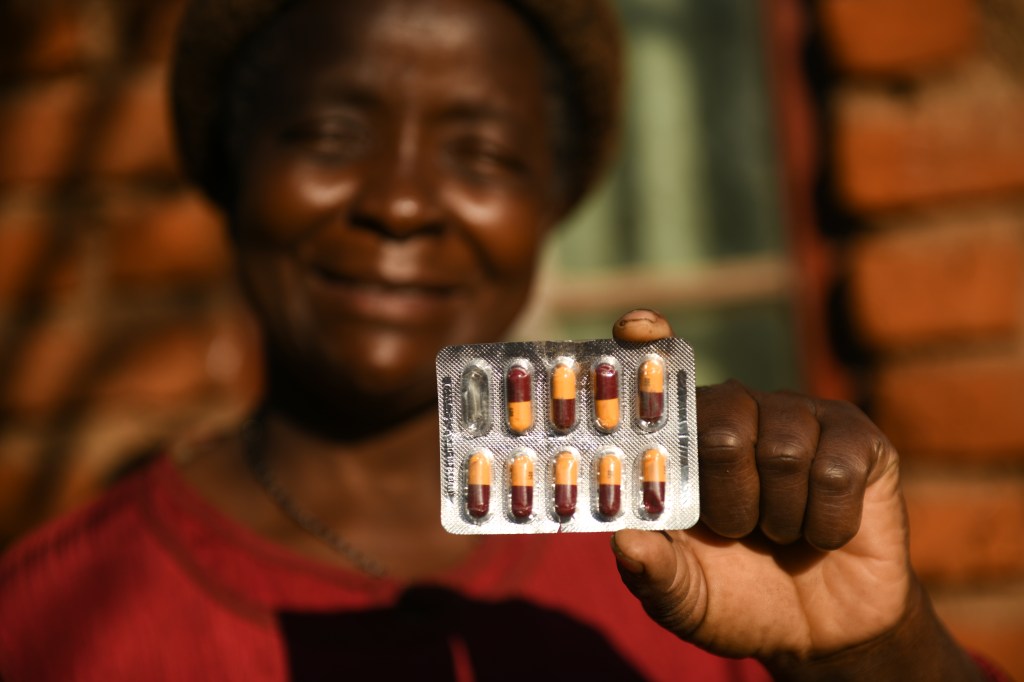
Globally, antimicrobial resistance has often been framed as either a problem of access or excess, with stewardship interventions and overall reductions the dominant intervention to ‘rationalise’ use. Insufficient attention has been paid to care relations beyond the binary of ‘too many’ or ‘too few’ – particularly in low-income contexts – and how these relations shape, and are shaped by, antibiotic prescribing. Addressing this gap, our ethnographic work provides an in-depth examination of the practices that comprise care in rural Chikwawa. In this context, we found that care was centred around provision of an antimicrobial. Amid chronic lack of essential medicines and other resources, clinic interactions were tightly scripted, providing patients little time to question or negotiate their treatment. Based on our empirical work we developed the concept of ‘antibiotic vulnerabilities’ to reveal multiple ways in which provision of antimicrobials in rural Malawi impacts care in conditions of extreme scarcity.
Chileka, Malawi Photo credit: Thoko Chikwondi
Implications of our work Ensuring a stable drug supply is vital, but must be accompanied by wider changes that enable quality care to be performed and received beyond antibiotic-oriented case management. We propose programmes be designed not only to protect vulnerable antibiotics, and patients vulnerable to antibiotic resistance but also to protect patients from systems that have come to be organised around antibiotics which leave patients with insufficient care.
About an hour after my son was born, he developed breathing difficulties. He was my first child and the labour like many first labours was long and exhausting. Meeting my child for the first time, and then having him taken away by the doctors has always stayed with me. My son recovered after a stint in the neonatal intensive care unit. Memories of his difficult start came back to me often during weekly debriefing sessions for an ethnographic study we have now completed and published in Wellcome Open. The study was exploring the implementation of infection prevention and control (IPC) policies in a neonatal intensive care unit in Blantyre. The department has seen frequent outbreaks of neonatal sepsis associated with drug-resistant Klebsiella pneumoniae.
Emotions and Ethnographic fieldwork
Helen Mangochi lead the fieldwork and drew on her 28 years of nursing and midwifery work in Malawi to undertake participant observation.
Helen Mangochi
She provided care and captured the lived experiences of mothers, caregivers (the women who provide critical care to babies on the unit), and front-line workers (including clinical and auxiliary staff). Together we analysed the data meeting weekly to reflect on the findings, identify any new avenues for research inquiry and discuss any ethical dilemmas Helen faced. In an incredibly resource-limited context, Helen captured many heartbreaking stories, speaking of the powerlessness she sometimes felt when trying to provide care. I found it hard not to relate my own story to the many hardships these mothers faced navigating a health system typified by extreme scarcity. We both shed many tears during the debriefings speaking to the emotional labour conducting research can have.
IPC on the ward
Our findings showed that while both caregivers and staff had a good understanding of ideal infection prevention and control (IPC) practices they faced challenges implementing policies and procedures. For health workers overwhelming workloads, staff shortages and a lack of material resources including intermittent access to water. For caregivers the lack of basic resources, including insufficient chairs and lack of access to clean linen were barriers. Power dynamics shaped who had access to the material resources including the washing basins with caregivers often told to use ones outside the ward.
Implications for policy
Drug resistant infections are increasing rapidly across the world. The structural and material conditions of low-income countries mean that the ramifications will be more acutely felt in these settings. Our work speaks to the critical need to provide improved WASH infrastructure, address staff shortages and cocreate solutions that meet the hygiene and IPC challenges that staff and caregivers’ encounter.
For the past four years, my team and I have been working with collaborators on a range of projects that have aimed to understand household antibiotic use practices in different contexts in Malawi. I am delighted to say that we have a new publication that focuses specifically on antibiotic use and small-scale intensive farming in Malawi.
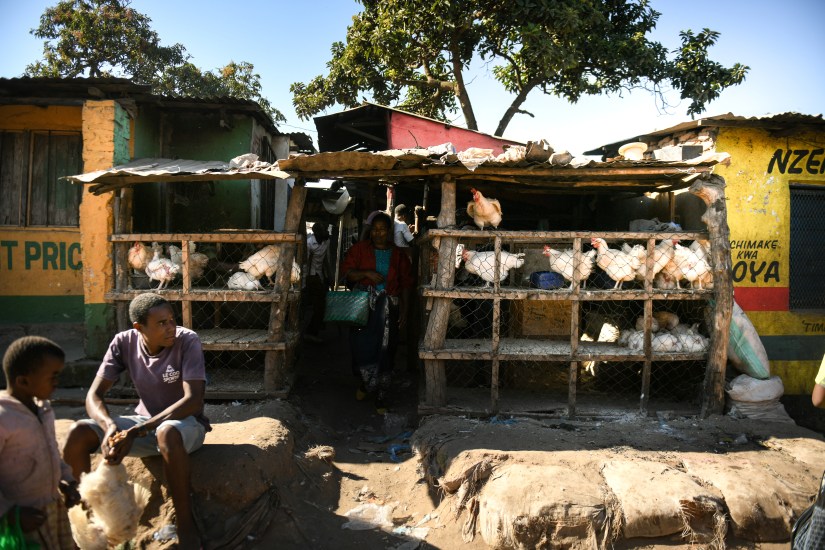
Chicken sellers in Ndirande, Malawi Photo credit: Thoko Chikondi
Antibiotics and meat production Since the 1960s, routine use of antibiotics in meat production has reduced the cost of food and enabled radical gains in both yield and profit. Yet, the regular dosing of food animals with sub-therapeutic doses of antibiotics to promote growth and prevent disease has been identified as a potential driver of antimicrobial resistance in both humans and animals. There are significant knowledge gaps around antibiotic use practices, particularly in sub-Saharan Africa.
Small-scale intensive farming Chickens were most frequently farmed animals by scale-scale intensive farmers. To raise the birds quickly and ensure they remained healthy, farmers relied heavily on antibiotics. There were also times when farmers unknowingly gave antibiotics to their birds through feed and vitamin mixes. The dependence on antibiotics by these farmers was shaped by intersecting factors including livelihood precarity, unequal market conditions, timeliness, and affordability of access to veterinary advice and services. All animal antibiotics used were manufactured internationally and imported. The political economy and governance of medicines underpinned these immediate drivers.
Implications of our work Our findings speak to the need for a holistic approach to interventions to optimise the use of antibiotics in food animals in Malawi. Interventions to reduce dependence on antibiotics are required. These should include efforts to improve farmers’ timely access to affordable veterinary services and provide more information about appropriate antibiotic use including withdrawal periods and feed supplementation. At the policy level efforts are also needed to strengthen regulation and the enforcement of legislation nationally and globally.